
Meritocratic Ruists make two basic claims: first, that meritocracy is more historically faithful to Ruist tradition, and second, that it makes for a more effective government. In particular, it can avoid the problems of democracy, among which the ignorance and short-sightedness of voters are prominent. The claim goes that since voters generally understand the issues poorly and are unwilling to sacrifice their immediate interests for future gains, democracies make bad decisions. Without getting into whether these criticisms are accurate for the moment, I’m curious what people think of this line of argument against democracy. If it were true that democracy inevitably has such problems and there were good reason to think meritocracy would do better, would you support meritocracy?
Category Archives: Comparative Political Theory
Three More Reviews: Zhao/Dallmayr, Chan, Bai
‘Tis the season for reviews of works in Chinese philosophy to be published, apparently! The latest issue of The China Journal has reviews of three recent works in our field, along with much else of interest:
- Leigh Jenco reviews Contemporary Chinese Political Thought: Debates and Perspective, edited by Fred Dallmayr and Zhao Tingyang; she finds much to like about several of the included articles, though has misgivings about the introduction and some of the editorial choices.
- Jason Clower reviews The Thought of Mou Zongsan by N. Serina Chan; Clower emphasizes its usefulness as a reference on the sprawling writing and thinking of Mou.
- John Makeham reviews China: The Political Philosophy of the Middle Kingdom by Tongdong Bai; Makeham emphasizes the book’s idiosyncracies.
Hon Reviews Angle, Contemporary Confucian Political Philosophy
Tze-ki Hon’s review of my latest book, Contemporary Confucian Political Philosophy: Toward Progressive Confucianism (Polity, 2012) has been published “on-line first” in Dao. (If your library subscribes to Dao, you should be able to get to the article, though quite possibly not through the link I just gave.) The review’s final paragraph reads:
While Angle may not be completely faithful to MOU Zongsan, he succeeds in drastically changing the image of New Confucianism. Instead of an abstract philosophy in the ivory tower, he transforms New Confucianism into a political theory for promoting tolerance, diversity, and equality. While it is still early to tell whether New Confucianism will have a strong impact on twenty-first century Chinese politics, it is clear that the three parts of a healthy society that Angle describes—the ethic subjectivity, the rights of the public, and the communicative acts based on rituals—are essential to building a fair and open political system in China. They directly address the new political condition of contemporary China where individuals aggressively demand recognition of their unique personality, inalienable rights, and full participation in the communicative lifeworld.
Many thanks to Tze-ki for his generous and probing review!
Van Norden Reviews Cline on NDPR
Notre Dame Philosophical Reviews
2013.07.38 View this Review Online View Other NDPR Reviews
Erin M. Cline, Confucius, Rawls, and the Sense of Justice, Fordham University Press, 2013, 354pp., $65.00 (hbk), ISBN 9780823245086.
Reviewed by Bryan W. Van Norden, Vassar College
Jiang Qing and Fundamentalism
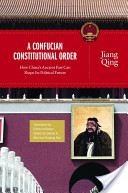 A couple of years ago, we had some discussion on this blog of the idea of Confucian “fundamentalism,” sparked by comments of Peng Guoxiang, in response to criticism from some Confucians of plans for a large church in Qufu, near the ancestral home of the Kong family (Confucius’s family). (See also the discussion of Ralph Weber’s later post, as well.) At that time, some commentators on the blog said that they felt “fundamentalism” was inapt. Prompted by having to write a review of Jiang Qing’s A Confucian Constitutional Order: How China’s Ancient Past Can Shape Its Political Future (Princeton, 2013), I would like to revisit this general question, being more specific both about what “fundamentalism” means and about the target of my analysis: not the broad group of signers of earlier petitions, but specifically Jiang Qing as he represents himself in this new book.
Upcoming SOAS Lecture and Workshop on Comparative Political Theory
Two events at SOAS this week, both celebrating the launch of a new MSc program in Comparative Political Thought:
Can Confucianism Be “Progressive”? A Debate on Contemporary Confucian Political Philosophy
There will be a friendly debate on some of the ideas in my Contemporary Confucian Political Philosophy: Toward Progressive Confucianism book, held next week at Hong Kong University. Please come and join in the fun — though note that registration is required, just to keep track of numbers. The “critics” with whom I will be conversing are Joseph Chan, Fan Ruiping, and Sungmoon Kim. It will be held 16 April 2013 (Tuesday), 14:30 – 17:30. More information on the location and schedule, as well as on-line registration, is available here.
New Masters in Comparative Political Theory
SOAS MSc in Comparative Political Thought
In September 2013, the Department of Politics and International Studies at SOAS, University of London will start a new MSc in Comparative Political Thought, the first programme in the UK devoted to this field of study.
Position in Comparative Political Theory
Reader / Professor in Comparative Politics or Political Theory
SOAS, University of London -Department of Politics and International Studies
Reader: £48,075-£55,367 p.a inclusive of London Allowance
Professor: £55,807-£75,271 p.a. inclusive of London Allowance
Vacancy no. 000493
The Department of Politics and International Studies seeks to make a senior appointment in Comparative Politics or Political Theory.
For the Political Theory appointment, the Department is particularly interested in candidates with expertise in Comparative Political Thought and Political Philosophy who can take forward additional programme development in these areas.
Zhao Tingyang Lecture at Harvard this Wednesday
How to Make a World of Perpetual Peace
Prof. Zhao Tingyang (Chinese Academy of Social Sciences; HYI Visiting Professor of East Asian Thought)
Discussant: Professor Stephen Angle (Philosophy and East Asian Studies, Wesleyan University)
Date: Wednesday, March 6, 2013
Time: 4:15 pm
Location: Common Room, 2 Divinity Ave., Cambridge, MA
The new problem of our times is that of a failed world rather than failed states. Globalization has brought us to the unpleasant fact that our supposed world is actually a non-world. Rather than dealing with the problems of globality by means of modernity, we must make a world, one of perpetual peace, with an ‘all-under-heaven’ system that reaches beyond the nation state system, with relational rationality emphasized more than individual rationality.
