
An economist colleague called my attention to a fascinating article recently posted as an NBER Working Paper: Liu, Meng, and Wang, “Confucianism and Preferences: Evidence from Lab Experiments in Taiwan and China.” Abstract below; link to paper here.
Category Archives: Contemporary Confucianism
Roger Ames Awarded 2013 Confucius Culture Prize
“UH Mānoa Philosophy Professor Roger T. Ames has been presented with a 2013 Confucius Culture Prize at the Sixth Annual World Confucian Conference in Shandong, China. The prizes are sponsored by the People’s Republic of China (PRC) Ministry of Culture and the provincial government of Shandong Province—the home province of the sage Confucius.”
The full press release can be found here: http://manoa.hawaii.edu/news/article.php?aId=6047
Two New Books Related to Confucianism

Confucian Rituals and Chinese Villagers:
Ritual Change and Social Transformation in a Southeastern Chinese Community, 1368-1949
Brill 2013
In Confucian Rituals and Chinese Villagers, Yonghua Liu presents a detailed study of how a southeastern Chinese community experienced and responded to the process whereby Confucian rituals – previously thought unfit for practice by commoners – were adopted in the Chinese countryside and became an integral part of village culture, from the mid fourteenth to mid twentieth centuries.
The book examines the important but understudied ritual specialists, masters of rites (lisheng), and their ritual handbooks while showing their crucial role in the ritual life of Chinese villagers. This discussion of lisheng and their rituals deepens our understanding of the ritual aspect of popular Confucianism and sheds new light on social and cultural transformations in late imperial China.
Yonghua Liu, Ph.D. (McGill, 2004), is Professor of History at Xiamen University, China. He has published over two dozen articles on economic, social, and cultural history of late imperial China.
Confucian Marxism:
A Reflection on Religion and Global Justice
Brill 2013
Buttressed by an autocratic system, China’s colossal economic growth over the past decades seems to have had the paradoxical effect of undermining the foundation of Western domination but at the same time invigorating Eurocentricism. In particular, it highlights the current relevance of the central conviction of Weber’s Orient: the absence of civic roots in non-Western societies will create a kind of “uncivic” capitalist system in which one has no choice but to seek to compensate for instabilities through authoritarian institutions. Does this mean that the West may alone afford to harmonize political stability with the universalistic ideal of justice as the basic structure of society? If not, how then is it possible to develop a notion of the primacy of social justice that transcends the limits of liberal democracy? This book aims at addressing these timely questions by drawing on “Confucian Marxism”—a distinctive perspective on civil society.
Weigang Chen, Ph. D. (Religious Studies, Harvard University 2000), is on the faculty of philosophy and religious studies at University of Macau, with research interests in religion and global politics. He is a member of the editorial board of Dao: A Journal of Comparative Philosophy.
New book on Meritocracy
A new book titled The East Asian Challenge for Democracy: Political Meritocracy in Comparative Perspective, coedited by Daniel Bell and Chenyang Li, has just been published by Cambridge University Press. It is an interdisciplinary work with contributions by leading historians, social scientists, and philosophers. It is the first book in decades to examine the rise (or revival) of political meritocracy and what it will mean for political developments in China and the rest of the world. It also reminds us that there are political alternatives to electoral democracy and military dictatorship. Here is the link on amazon, where you’ll see a brief endorsement from me (among other people).
Confucian Religion Leaders Summit 2013
I recently received an invitation to attend — as an observer — the following event. Alas, I won’t be able to get myself to Jakarta for it, but I thought that blog readers might be interested to know that there is such an event. I will paste a little information here, and I also attach this longer document with some further details. I do not believe it is open to the public.
Meritocracy and Democracy
Meritocratic Ruists make two basic claims: first, that meritocracy is more historically faithful to Ruist tradition, and second, that it makes for a more effective government. In particular, it can avoid the problems of democracy, among which the ignorance and short-sightedness of voters are prominent. The claim goes that since voters generally understand the issues poorly and are unwilling to sacrifice their immediate interests for future gains, democracies make bad decisions. Without getting into whether these criticisms are accurate for the moment, I’m curious what people think of this line of argument against democracy. If it were true that democracy inevitably has such problems and there were good reason to think meritocracy would do better, would you support meritocracy?
Three More Reviews: Zhao/Dallmayr, Chan, Bai
‘Tis the season for reviews of works in Chinese philosophy to be published, apparently! The latest issue of The China Journal has reviews of three recent works in our field, along with much else of interest:
- Leigh Jenco reviews Contemporary Chinese Political Thought: Debates and Perspective, edited by Fred Dallmayr and Zhao Tingyang; she finds much to like about several of the included articles, though has misgivings about the introduction and some of the editorial choices.
- Jason Clower reviews The Thought of Mou Zongsan by N. Serina Chan; Clower emphasizes its usefulness as a reference on the sprawling writing and thinking of Mou.
- John Makeham reviews China: The Political Philosophy of the Middle Kingdom by Tongdong Bai; Makeham emphasizes the book’s idiosyncracies.
Hon Reviews Angle, Contemporary Confucian Political Philosophy
Tze-ki Hon’s review of my latest book, Contemporary Confucian Political Philosophy: Toward Progressive Confucianism (Polity, 2012) has been published “on-line first” in Dao. (If your library subscribes to Dao, you should be able to get to the article, though quite possibly not through the link I just gave.) The review’s final paragraph reads:
While Angle may not be completely faithful to MOU Zongsan, he succeeds in drastically changing the image of New Confucianism. Instead of an abstract philosophy in the ivory tower, he transforms New Confucianism into a political theory for promoting tolerance, diversity, and equality. While it is still early to tell whether New Confucianism will have a strong impact on twenty-first century Chinese politics, it is clear that the three parts of a healthy society that Angle describes—the ethic subjectivity, the rights of the public, and the communicative acts based on rituals—are essential to building a fair and open political system in China. They directly address the new political condition of contemporary China where individuals aggressively demand recognition of their unique personality, inalienable rights, and full participation in the communicative lifeworld.
Many thanks to Tze-ki for his generous and probing review!
Jiang Qing and Fundamentalism
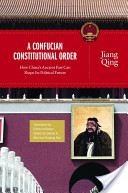 A couple of years ago, we had some discussion on this blog of the idea of Confucian “fundamentalism,” sparked by comments of Peng Guoxiang, in response to criticism from some Confucians of plans for a large church in Qufu, near the ancestral home of the Kong family (Confucius’s family). (See also the discussion of Ralph Weber’s later post, as well.) At that time, some commentators on the blog said that they felt “fundamentalism” was inapt. Prompted by having to write a review of Jiang Qing’s A Confucian Constitutional Order: How China’s Ancient Past Can Shape Its Political Future (Princeton, 2013), I would like to revisit this general question, being more specific both about what “fundamentalism” means and about the target of my analysis: not the broad group of signers of earlier petitions, but specifically Jiang Qing as he represents himself in this new book.
Huang Yushun Blog
Huang Yushun 黄玉顺 is one of the more prominent Chinese philosophers currently engaged in the creative development of Confucian philosophy in China. His blog offers a window onto some of his work and interests. Enjoy!
