
The deadline for New England Association for Asian Studies Conference has been extended to August 1st. Please submit all panels or individual paper proposals online here. Bridgewater State University is conveniently located between Boston and Providence and easily accessible by car or by commuter rail from Boston. Participants who are from outside Eastern Massachusetts can choose from a large number of hotels south of Boston or around Route 24 near Bridgewater, or stay at a hotel in Boston to take the train from South Station to Bridgewater.
Author Archives: Steve Angle
CFP: Early China Conference
The Society for the Study of Early China’s Second Annual Conference
Thursday, 26 March 2014, 9:00 AM – 5:30 PM
Philadelphia Marriott Downtown
Jiang Qing and Fundamentalism
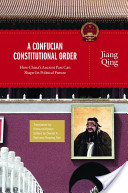 A couple of years ago, we had some discussion on this blog of the idea of Confucian “fundamentalism,” sparked by comments of Peng Guoxiang, in response to criticism from some Confucians of plans for a large church in Qufu, near the ancestral home of the Kong family (Confucius’s family). (See also the discussion of Ralph Weber’s later post, as well.) At that time, some commentators on the blog said that they felt “fundamentalism” was inapt. Prompted by having to write a review of Jiang Qing’s A Confucian Constitutional Order: How China’s Ancient Past Can Shape Its Political Future (Princeton, 2013), I would like to revisit this general question, being more specific both about what “fundamentalism” means and about the target of my analysis: not the broad group of signers of earlier petitions, but specifically Jiang Qing as he represents himself in this new book.
SEECR Deadline Approaching
The submission deadline for the 17th Southeast Early China Roundtable is approaching, and more submissions are welcomed! Please see this earlier post for more details.
ToC: Asian Philosophy 23.3
A new issue of Asian Philosophy 23.3 (2013) has been published. Five out of the six papers are on Chinese Philosophy:
Moral Emotions, Awareness, and Spiritual Freedom in the Thought of Zhu Xi (1130–1200)
Kai Marchal
Dōgen and Wittgenstein: Transcending Language through Ethical Practice
Laura Specker Sullivan
Han Fei’s Enlightened Ruler
Alejandro Bárcenas
Han Fei, De, Welfare
Henrique Schneider
Clearing Up Obstructions: An Image Schema Approach to the Concept of ‘Datong’ in Chapter 6 of the Zhuangzi
C. Lynne Hong
International Daoism Conference
A major conference on Daoism is returning to Boston next year. For information on registration and paper submission, see below.
Daoism: Tradition and Transition
9th International Conference on Daoist Studies
Boston University, May 30- June 1, 2014
For the last ten years, the series of international conferences on Daoist Studies has been instrumental in enhancing the study, application, and awareness of Daoism throughout the world. The only major Daoist conference series, it follows a tradition that began in Boston (2003) and continued through Mt. Qingcheng (2004), Fraueninsel in Bavaria (2006), Hong Kong (2007), Mt. Wudang (2009), Los Angeles (2010), Mt. Nanyue (2011), and Ammersee Lake near Munich (2012). In honor of its great success and as a tribute to Boston University for the initial conference, the 9th International Conference on Daoist Studies will take place once again at Boston University.
New Book: Complete Heguanzi Translation
Three Pines Press is happy to announce the publication of the HEGUANZI in its first FULL English translation and detailed discussion:
The Pheasant Cap Master and the End of History: Linking Religion to Philosophy in Early China
By Marnix Wells
ISBN 978-1-931483-26-1
July 2013
PREPUBLICATION SPECIAL: 27.50 USD plus S&H
TO ORDER: www.threepinespress.com
New Book: Springer, Communicating Moral Concern
 My Wesleyan University colleague Elise Springer’s new book, Communicating Moral Concern: An Ethics of Critical Responsiveness (MIT Press, 2013) has just been published, and I’d like to recommend it to all blog readers with interests in comparative ethics, especially if you are tempted by the idea that the job of moral philosophers — and indeed, our jobs as moral agents — are not exhausted by making determinations of what the “right action” is. Her view is that such “verdicts” have at most a small place in our daily efforts to live good lives, and this rich and fascinating book explores the rest of the terrain. In the words of one of my teachers:
“This book is simply spectacular. I am stunned by its originality, intellectual sophistication, philosophical maturity, and depth of vision. I learned new things from virtually every page. Philosophers have a huge bias in favor of examining already articulated judgments, and thereby ignore the incredibly difficult and important work of developing an articulation of what is the matter. Elise Springer persuasively argues that this work deserves sustained attention in its own right, and offers new conceptual tools for making sense of what we are doing at that stage.” — Elizabeth Anderson, John Rawls Collegiate Professor of Philosophy and Women’s Studies, University of Michigan
As if that wasn’t enough, in a few places Elise explicitly engages with Confucian ideas, and in general is very open to a broadly global scope of philosophical endeavor. I myself find a great deal of continuity between her work and current work at the nexus of Confucianism, moral psychology, moral education/cultivation, and virtue ethics, though I also find some of her key ideas very challenging to certain Confucian pieties. Finally, while it is only available in hardcover right now, at Amazon the price is only a little over US$30.00 :-).
Upcoming SOAS Lecture and Workshop on Comparative Political Theory
Two events at SOAS this week, both celebrating the launch of a new MSc program in Comparative Political Thought:
Huang Yushun Blog
Huang Yushun 黄玉顺 is one of the more prominent Chinese philosophers currently engaged in the creative development of Confucian philosophy in China. His blog offers a window onto some of his work and interests. Enjoy!
