Category Archives: Politics

New Reviews in The China Journal

The latest issue of The China Journal has some book reviews that will interest many:

  • Review Essay: Modernity and the Chinese Moral Crisis, by Andrew B. Kipnis (reviewing Moral China in the Age of Reform, by Jiwei Ci; and The Stranger and the Chinese Moral Imagination, by Haiyan Lee.)
  • Bryce Kositz reviews Politics and Traditional Culture: The Political Use of Traditions in Contemporary China, by Janette Ai (Singapore: World Scientific, 2015).
  • Vanessa L. Fong reviews Ordinary Ethics in China, edited by Charles Stafford (London: Bloomsbury Academic, 2013).

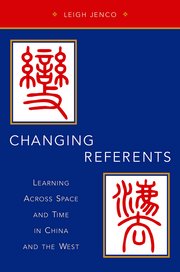
New Book: Jenco, Changing Referents

I am happy to announce the publication of Leigh Jenco’s new book; congratulations!

L9780190263812eigh Jenco, Changing Referents: Learning Across Space and Time in China and the West (Oxford University Press, 2015): 304 Pages; ISBN: 9780190263812

Globalization has brought together otherwise disparate communities with distinctive and often conflicting ways of viewing the world.  Yet even as these phenomena have exposed the culturally specific character of the academic theories used to understand them, most responses to this ethnocentricity fall back on the same parochial vocabulary they critique. Against those who insist our thinking must return always to the dominant terms of Euro-American modernity, I argue and demonstrate that methods for understanding cultural others can take theoretical guidance from those very bodies of thought typically excluded by political and social theory.

Continue reading →

New Book: 公民儒學 (Civic Confucianism)

When I was in Taiwan last week, friends there recommended that I should look at the new book 《公民儒學》 (Civic Confucianism) by Norman Teng 鄧育仁, recently published by National Taiwan University Press. Professor Teng, who received his PhD a number of years ago from Southern Illinois University, is now a researcher at the Academia Sinica; I had a chance to meet him and talk with him at length about his book and future research projects while I was there. The book is fascinating. He proposes that in this age of democratic pluralism, a “civic philosophical 公民哲學” approach should be to seek serious dialogue among philosophical traditions, in the spirit of egalitarian democracy. In particular, he is interested in how we should think about Confucians and Confucianism in a pluralistic, democratic society like Taiwan. His book combines a number of innovative methodological approaches (e.g., paying special attention to the ways that early Confucians use narrative reflection and the reframing of premises, rather than explicit deductive logic, which techniques can then be applied in the present day as well) in order to explore a particular means of developing a form of democratic Confucianism today. He draws extensively on John Rawls in some chapters; that, plus his emphasis on a rootedness in the actual experience of Taiwan’s democratic society, suggests some very interesting comparisons between Teng’s work and that of Sungmoon Kim (whose work on modern Confucian democracy is rooted in the experience of South Korea). In any event, well worth serious attention for those of us thinking about the future of Confucianism.

This Friday’s Columbia Neo-Confucianism Seminar

The next session of the Columbia University Seminar on Neo-Confucian Studies will convene Friday, November 6, 2015 from 3:30 to 5:30pm in the Heyman Center for the Humanities at Columbia University.

Eske Mollgaard will present the paper “Can Confucians Universalize Themselves?”  Please contact the organizers for a copy.

All are welcome to attend. Please join us after the seminar for dinner at a location to be announced.

If you have any questions, contact one of our organizers: Ari Borrell (aborrell@msn.com), Tao Jiang (tjiang@rci.rutgers.edu), or Deborah Sommer (dsommer@gettysburg.edu).

Book on Kang Xiaoguang

Kang Xiaoguang is an interesting contemporary Chinese social scientist, public intellectual, and promoter of a particular brand of Confucianism; I wrote about him a bit in Contemporary Confucian Political Philosophy. I have now learned that there is an English-language book about him:  Monika Gaenssbauer, Confucianism and Social Issues in China — the Academician Kang Xiaoguang: Investigations into NGOs in China, the Falun Gong, Chinese Reportage, and the Confucian Tradition (Projectverlag, 2011). I will have to take a look!

New Book: Daniel Bell, The China Model

Daniel A. Bell’s new book, The China Model: Political Meritocracy and the Limits of Democracy (Princeton, 2015) has been published. Amazon is here. Unsurprisingly, the book is occasioning considerable discussion. One early review is here. Comments (and references to other reviews) are welcome!