Category Archives: Politics

Three More Reviews: Zhao/Dallmayr, Chan, Bai

‘Tis the season for reviews of works in Chinese philosophy to be published, apparently! The latest issue of The China Journal has reviews of three recent works in our field, along with much else of interest:

  • Leigh Jenco reviews Contemporary Chinese Political Thought: Debates and Perspective, edited by Fred Dallmayr and Zhao Tingyang; she finds much to like about several of the included articles, though has misgivings about the introduction and some of the editorial choices.
  • Jason Clower reviews The Thought of Mou Zongsan by N. Serina Chan; Clower emphasizes its usefulness as a reference on the sprawling writing and thinking of Mou.
  • John Makeham reviews China: The Political Philosophy of the Middle Kingdom by Tongdong Bai; Makeham emphasizes the book’s idiosyncracies.
Hon Reviews Angle, Contemporary Confucian Political Philosophy

Tze-ki Hon’s review of my latest book, Contemporary Confucian Political Philosophy: Toward Progressive Confucianism (Polity, 2012) has been published “on-line first” in Dao. (If your library subscribes to Dao, you should be able to get to the article, though quite possibly not through the link I just gave.) The review’s final paragraph reads:

While Angle may not be completely faithful to MOU Zongsan, he succeeds in drastically changing the image of New Confucianism. Instead of an abstract philosophy in the ivory tower, he transforms New Confucianism into a political theory for promoting tolerance, diversity, and equality. While it is still early to tell whether New Confucianism will have a strong impact on twenty-first century Chinese politics, it is clear that the three parts of a healthy society that Angle describes—the ethic subjectivity, the rights of the public, and the communicative acts based on rituals—are essential to building a fair and open political system in China. They directly address the new political condition of contemporary China where individuals aggressively demand recognition of their unique personality, inalienable rights, and full participation in the communicative lifeworld.

Many thanks to Tze-ki for his generous and probing review!

Van Norden Reviews Cline on NDPR

Notre Dame Philosophical Reviews

2013.07.38 View this Review Online   View Other NDPR Reviews

Erin M. Cline, Confucius, Rawls, and the Sense of Justice, Fordham University Press, 2013, 354pp., $65.00 (hbk), ISBN 9780823245086.

Reviewed by Bryan W. Van Norden, Vassar College

Continue reading →

Jiang Qing and Fundamentalism

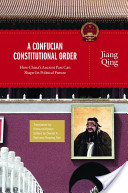
booksA couple of years ago, we had some discussion on this blog of the idea of Confucian “fundamentalism,” sparked by comments of Peng Guoxiang, in response to criticism from some Confucians of plans for a large church in Qufu, near the ancestral home of the Kong family (Confucius’s family). (See also the discussion of Ralph Weber’s later post, as well.) At that time, some commentators on the blog said that they felt “fundamentalism” was inapt. Prompted by having to write a review of Jiang Qing’s A Confucian Constitutional Order: How China’s Ancient Past Can Shape Its Political Future (Princeton, 2013), I would like to revisit this general question, being more specific both about what “fundamentalism” means and about the target of my analysis: not the broad group of signers of earlier petitions, but specifically Jiang Qing as he represents himself in this new book.

Continue reading →

Conference: The Classic of Documents and the Origins of Chinese Political Philosophy

International Conference: “The Classic of Documents and the Origins of Chinese Political Philosophy”

Princeton University, May 17-18, 2013

The conference is open to the public. It will focus on a series of case studies on individual chapters from the Shangshu, with an emphasis on rhetoric and ideology. Those interested in attending should email Martin Kern (mkern@princeton.edu) for preregistration and further information.

Weber, The Politics of Confucian Political Philosophy

In this guest post, Ralph Weber of the University of Zurich shares with us his English translation of an opinion piece just published in Germany (as “Politik, Konfuzianismus und konfuzianische politische Philosophie in der VR China heute.” In: Widerspruch – Münchner Zeitschrift für Philosophie, Nr. 56, 2013.) Please direct comments to Dr. Weber.

The Politics of ‘Confucian Political Philosophy’

Ralph Weber, University of Zurich

***

In the People’s Republic of China (PRC), Confucius, the Master, is “standing tall” again, as a People’s Daily headline put it (13 January 2011), referring to a ten meter bronze statue which since January was standing right next to Tiananmen Square in Beijing, before it was dislocated to a less prominent spot in April 2011 for reasons as yet unknown.[1] Not to be mistaken, the statue was not the latest version of the Goddess of Democracy, which students had erected in June 1989 as a symbol of protest and reform. The Confucius statue was not erected against the Chinese government; it had been put there with official endorsement – something that only decades ago would have been unthinkable – and surely it was also dislocated again with official endorsement. The short but prominent appearance of the Confucius statue at one of the most symbolic places in all of China showcases the wavering attitude of the Chinese government on what to do with Confucianism and perhaps reveals once more how split the government is in terms of doctrine and ideology.

Continue reading →

Review of Angle, Contemporary Confucian Political Philosophy

NDRP has published a review by BAI Tongdong of Fudan University of my recent book, Contemporary Confucian Political Philosophy: Towards Progressive Confucianism (Polity, 2012). Many thanks to Tongdong for this generous review!

I’d like to take this opportunity to respond very briefly to a couple of the things that Tongdong says in his review. He feels that both Mou Zongsan and I, in our related but separate ways, have left largely unaddressed the question: “can Confucianism make any constructive and systematic contributions to fundamental issues in political philosophy other than being only a “cheerleader” (a sincere one, as Angle tries to show) of liberal democracy?” This is related to some of the other critical remarks he raises late in the review, including the suggestion that in my chapter on human rights, I rest content with the current “responsibility to protect” doctrine, and also Tongdong’s questions about how “Confucian” Progressive Confucianism is.

Continue reading →

Angle’s Review of Fred Dallmayr and ZHAO Tingyang, eds. Contemporary Chinese Political Thought

A month ago I noted that Sungmoon Kim’s review of Fred Dallmayr and ZHAO Tingyang, eds. Contemporary Chinese Political Thought: Debates and Perspectives had been published at NDPR. My own review for Dao of the same book has now been published on-line first, and should be accessible to those with institutional access to Dao. I’ll paste the first couple paragraphs, as well as the penultimate paragraph (which makes a fairly self-standing point), below.

Continue reading →