Category Archives: Books of Interest

Buddhism Bibliography

Charles Muller writes…

Dear Colleagues,

Richard Smith’s kind offering of his bibliography made me think that it
might be worthwhile mentioning the H-Buddhism Zotero Bibliography (which
has a fair number of entries on Confucianism, not to mention China).

https://www.zotero.org/groups/h-buddhism_bibliography_project

Zotero provides useful tools on the web site, but of course, it is an
even much more powerful tool if you figure out how to run Zotero locally
in Firefox. If anyone was ever motivated to start a similar project for
Confucianism, he or she could go a long way in seeding it by simply
exporting the Confucianism entries from our project. Smith’s
bibliography could also be converted and imported fairly easily.

We presently have it set up so that anyone can view it, but only members
can edit, because we want to keep the content scholarly. If you’d like
me to send you an invite to join, just write me.

Regards,

Charles

Am I Missing Your Favorite Book?

This semester I am teaching a seminar on Comparative Philosophy. As part of the class, each of the 15 students will choose a monograph the engages in comparative philosophy (related at least in part to Chinese philosophy), and write an extended review essay on their book. They will then present their findings, revise the essays, and I will then edit the final versions into an on-line book, tentatively titled “Comparative Philosophy: Reviewing the State of the Art.” I have never done this before, but the students and I are excited.

I have compiled a list from which the students will choose their books, but I am afraid I may have left of some excellent choices. It is important that the books be explicitly engaged in comparative philosophy, rather than works of scholarship solidly focused on a single thinker or tradition. Exactly what “explicitly engaged in comparative philosophy” means is, admittedly, not always so clear, and there are a few books on my list that may be marginal cases. That’s not the end of the world. More importantly, what are the good choices that I have left off? Apologies in advance to authors whom I have inadvertently neglected! Please let me know, either in the Comments below, or via email. Thanks! The list follows.

Continue reading →

New Book – Theories of Truth in Chinese Philosophy

TheoriesOfTruthAlexus McLeod’s new book Theories of Truth in Chinese Philosophy: A Comparative Approach has been released by Rowman and Littlefield International (part of the new “Critical Inquiries in Comparative Philosophy” series).  The book deals with contemporary debates surrounding truth in early Chinese thought, as well as investigates conceptions of truth in the early Chinese texts themselves, from the Warring States through Eastern Han period.  More information here: [http://www.rowmaninternational.com/books/theories-of-truth-in-chinese-philosophy].

Alexus is currently at Colorado State University but will be moving to the University of Connecticut starting in the Fall term of 2016.

Muller Translates Korean Buddhist-Confucian Debate

The University of Hawaii Press has published Charles Muller’s translation: Korea’s Great Buddhist-Confucian Debate: The Treatises of Chong Tojon (Sambong) and Hamho Tuktong (Kihwa). More information is available below, and here.

Continue reading →

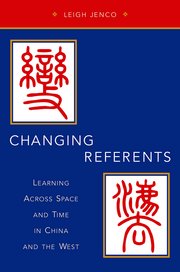
New Book: Jenco, Changing Referents

I am happy to announce the publication of Leigh Jenco’s new book; congratulations!

L9780190263812eigh Jenco, Changing Referents: Learning Across Space and Time in China and the West (Oxford University Press, 2015): 304 Pages; ISBN: 9780190263812

Globalization has brought together otherwise disparate communities with distinctive and often conflicting ways of viewing the world.  Yet even as these phenomena have exposed the culturally specific character of the academic theories used to understand them, most responses to this ethnocentricity fall back on the same parochial vocabulary they critique. Against those who insist our thinking must return always to the dominant terms of Euro-American modernity, I argue and demonstrate that methods for understanding cultural others can take theoretical guidance from those very bodies of thought typically excluded by political and social theory.

Continue reading →