
Harvard University Press has published Jaeyoon Song’s important new book on Song dynasty political thought and the role of the classics (in particular, the Zhou Li) in shaping politics. Congratulations, Jaeyoon!
Category Archives: Books of Interest
Wong Reviews Cline, Families of Virtue
Notre Dame Philosophical Reviews
2015.11.28 View this Review Online View Other NDPR Reviews
Erin M. Cline, Families of Virtue: Confucian and Western Views on Childhood Development, Columbia University Press, 2015, 342pp., $30.00 (pbk), ISBN 9780231171557 .
Reviewed by David B. Wong, Duke University
This book attributes to early Confucianism the view that the parent-child relationship has a “unique and irreplaceable” role in early moral development (xi) and goes on to argue that this view is right. In the course of making this argument Erin M. Cline provides careful and perceptive comparative readings of early Confucian texts and a very wide range of texts in the Western tradition, from Plato, Aristotle, Locke, and Rousseau to contemporary feminists, to show how unusual and in-depth the insights of Confucian thinkers were. She draws from a wide range of empirical studies to support the Confucian view. There is much in this book that will be of value to anyone with interests in the fields of the philosophy and psychology of moral development, feminist care ethics, and comparative ethics. Cline’s comparison of Confucian and feminist views, which have the most to say about parent-child relationships, is informative and balanced. It is not clear that she has fully established the unique and irreplaceable role of the parent-child relationship, but Cline surely has given enough argument to establish that the relationship is one of the most important factors, perhaps the most important single factor, in moral development, and she raises good questions as to why U.S. society largely neglects its importance in its public policies.
Recent Book on Daodejing, Han Feizi, and Machiavelli
A new book of interest: Jason P. Blahuta, Fortune and the Dao: A Comparative Study of Machiavelli, the Daodejing, and the Han Feizi (Lexington, 2015). The publisher’s description:
Chinese Translation of Contemporary Confucian Political Philosophy
I am very ha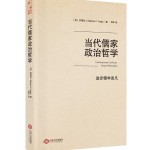 ppy to pass on the news that the Chinese translation of my book Contemporary Confucian Political Philosophy: Toward Progressive Confucianism (Polity, 2013) has been published by Jiangxi People’s Press, as 《当代儒家政治哲学:进步儒学发凡》. More information, including the Preface to the Chinese Edition, can be found here. In case anyone is interested in an English-language version of this new Preface, I will post it below.
Two Books on Korean Confucianism
Over the past year, Edward Chung has published two significant books on Korean Confucianism, one a translation and one an overview. Please read on for details.
Nathan and Bell on The China Model
More debate around Daniel Bell’s book The China Model (Princeton, 2015): Andrew Nathan’s “Beijing Bull: The Bogus China Model” and Bell’s reply, “Facts and Values: On China’s Political System.”
New Book: Translation of Chunqiu Fanlu
A major new book is about to be released: the 704-page Luxuriant Gems of the Spring and Autumn (春秋繁露), attributed to Dong Zhongshu; edited and translated by Sarah A. Queen and John S. Major (Columbia University Press). This is a tremendous accomplishment, and should help to further open up post-classical philosophy to broader attention and analysis.
New Book: Returning to Zhu Xi
I just received my copy (as a contributor; not sure it is yet available for order) of David Jones and Jinhe Li, eds., Returning to Zhu Xi: Emerging Patterns within the Supreme Polarity (SUNY, 2015). It looks splendid! Congratulations, David and Jinhe.
New Book: 公民儒學 (Civic Confucianism)
When I was in Taiwan last week, friends there recommended that I should look at the new book 《公民儒學》 (Civic Confucianism) by Norman Teng 鄧育仁, recently published by National Taiwan University Press. Professor Teng, who received his PhD a number of years ago from Southern Illinois University, is now a researcher at the Academia Sinica; I had a chance to meet him and talk with him at length about his book and future research projects while I was there. The book is fascinating. He proposes that in this age of democratic pluralism, a “civic philosophical 公民哲學” approach should be to seek serious dialogue among philosophical traditions, in the spirit of egalitarian democracy. In particular, he is interested in how we should think about Confucians and Confucianism in a pluralistic, democratic society like Taiwan. His book combines a number of innovative methodological approaches (e.g., paying special attention to the ways that early Confucians use narrative reflection and the reframing of premises, rather than explicit deductive logic, which techniques can then be applied in the present day as well) in order to explore a particular means of developing a form of democratic Confucianism today. He draws extensively on John Rawls in some chapters; that, plus his emphasis on a rootedness in the actual experience of Taiwan’s democratic society, suggests some very interesting comparisons between Teng’s work and that of Sungmoon Kim (whose work on modern Confucian democracy is rooted in the experience of South Korea). In any event, well worth serious attention for those of us thinking about the future of Confucianism.
New book by Sarah Allan
Just published: Sarah Allan, Buried Ideas: Legends of Abdication and Ideal Government in Early Chinese Bamboo-slip Manuscripts (SUNY Press, 2015). Note that it contains translations of the excavated texts that she discusses.
