Category Archives: Books of Interest

Dao Interested in Reviewers of Chinese Books

BAI Tongdong, professor at Fundan University, is in charge of reviews of Chinese-language books for Dao. He recently sent around a list of new books in which he is potentially interested in a review. Anyone interested in reviewing one of these books, please contact Prof. Bai directly. In addition, I thought that many readers might be interested in Prof. Bai’s list of these books, so it is posted below.

Continue reading →

Hutton’s Xunzi Translaton Published

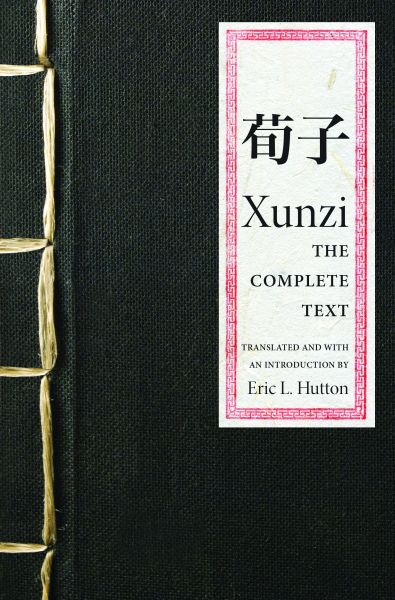
Xunzi_TheComplete

Xunzi: The Complete Text

Princeton University Press would like to announce the publication of Eric Hutton’s new translation of Xunzi.

“This is the first complete, one-volume English translation of the ancient Chinese text Xunzi, one of the most extensive, sophisticated, and elegant works in the tradition of Confucian thought. Through essays, poetry, dialogues, and anecdotes, the Xunzi articulates a Confucian perspective on ethics, politics, warfare, language, psychology, human nature, ritual, and music, among other topics. Aimed at general readers and students of Chinese thought, Eric Hutton’s translation makes the full text of this important work more accessible in English than ever before.

Continue reading →

New Book: Patriotism in East Asia

Jun-Hyeok Kwak (Soongsil University; website here) writes: 
I am very pleased to inform you that Patriotism in East Asia in the Routledge Series of Political Theories in East Asia has just been published. Please
find the website here in case you are interested. This volume contributes to the debates surrounding patriotism and nationalism in East Asia, and investigates the feasibility of non-enthnocentric patriotism in countries across the region.

Continue reading →

New Book: Readings in Later Chinese Philosophy

RLCP_cover  I’m pleased to announce the publication of our reader in post-classical Chinese philosophy.

I’ll put the details below the fold, but it might help to have a quick summary of some the book’s most noteworthy (or at least distinctive) advantages.

  • Better selections than Chan’s Sourcebook, including several overlooked gems and works on and by women
  • Consistent translations of key terms and oft-quoted passages
  • Begone Wade-Giles!


Continue reading →

New book by Jiwei Ci: Moral China in the Age of Reform

A significant new book has been published by Cambridge: philosopher Jiwei Ci‘s Moral China in the Age of Reform. The Amazon link gives on access to some of the book. Here’s what I say on the back cover:

“Jiwei Ci accomplishes two things in his splendid new book. First, he goes beyond the account of his seminal Dalectic of the Chinese Revolution (1994) to explore the causes and effects of the moral crisis that has accompanied China’s three decades of post-Mao reform. Second, he uses this analysis as the foundation for theories of freedom and human agency — theories that are deeply revealing not just of the possibilities and challenges faced by Chinese citizens, but also of the human condition more generally.”

Review of Chan, Confucian Perfectionism

This is a rich review of Joseph Chan’s important new book; the review is significant, in part, because it represents an engagement by someone from outside the Chinese philosophy world with contemporary Chinese thought. Wall is himself an advocate of perfectionism, which helps to explain why the cross-tradition engagement here is so fruitful.

Notre Dame Philosophical Reviews

2014.08.16 View this Review Online   View Other NDPR Reviews

Joseph Chan, Confucian Perfectionism: A Political Philosophy for Modern Times, Princeton University Press, 2014, 256pp., $35.00 (hbk), ISBN 9780691158617.

Reviewed by Steven Wall, University of Arizona

This is an unusual book. It is partly an effort to reconstruct and revive an ancient tradition of political thought, partly an exercise in comparing that tradition to western liberalism and partly a contribution to contemporary political theory. It does not fit into any well-defined disciplinary niche. Its unusual aims, in turn, present a challenge to the reviewer. Should the success of the project be assessed in terms of its fidelity to a tradition of thought that has shaped Chinese culture for over two millennia, or should it be assessed in terms of its contribution to contemporary political thought? No doubt the right answer to this question is that it should be assessed along both dimensions, but this answer does not tell us how much weight to give to each measure of assessment. My own assessment will not grapple with this problem, since I am in no position to gauge its success in remaining faithful to traditional Confucian ideas. Accordingly, this review does not offer a verdict on how well Confucian Perfectionism succeeds in its aim of staying true to Confucian political thought (leaving that judgment to others who are better placed to make it). It focuses instead on how well the view of politics that it presents hangs together and how well it contributes to an understanding of the political topics that it addresses.

Continue reading →