
Loubna El Amine has published a review (available here) of Fred Dallmayr’s Being in the World: Dialogue and Cosmopolis (Lexington: University of Kentucky Press, 2013). In light of El Amine’s remarks at the end of the review about the central place still occupied in Dallmayr’s theorizing by Western theory, it may be fruitful to compare with Leigh Jenco’s new book.
Category Archives: Comparative Political Theory
New Book: Jenco, Changing Referents
I am happy to announce the publication of Leigh Jenco’s new book; congratulations!
L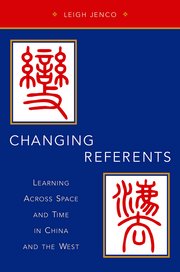 eigh Jenco, Changing Referents: Learning Across Space and Time in China and the West (Oxford University Press, 2015): 304 Pages; ISBN: 9780190263812
Globalization has brought together otherwise disparate communities with distinctive and often conflicting ways of viewing the world. Yet even as these phenomena have exposed the culturally specific character of the academic theories used to understand them, most responses to this ethnocentricity fall back on the same parochial vocabulary they critique. Against those who insist our thinking must return always to the dominant terms of Euro-American modernity, I argue and demonstrate that methods for understanding cultural others can take theoretical guidance from those very bodies of thought typically excluded by political and social theory.
Chinese Translation of Contemporary Confucian Political Philosophy
I am very ha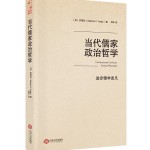 ppy to pass on the news that the Chinese translation of my book Contemporary Confucian Political Philosophy: Toward Progressive Confucianism (Polity, 2013) has been published by Jiangxi People’s Press, as 《当代儒家政治哲学:进步儒学发凡》. More information, including the Preface to the Chinese Edition, can be found here. In case anyone is interested in an English-language version of this new Preface, I will post it below.
El Amine’s Reflections on Cross-Cultural Life and Scholarship
Political theorist Loubna El Amine, author of a recent book on Confucian political thinking, has written a provocative reflection on “What is it Like to be Lebanese and to Work on China.”
Nathan and Bell on The China Model
More debate around Daniel Bell’s book The China Model (Princeton, 2015): Andrew Nathan’s “Beijing Bull: The Bogus China Model” and Bell’s reply, “Facts and Values: On China’s Political System.”
Harvard Conference: “Democracy & China: Philosophical-Political Reflections”
Democracy & China: Philosophical-Political Reflections
One-Day Workshop on Themes from the Work of Jiwei Ci
November 13, 2015, 9:30AM – 5:15 PM
Edmond J. Safra Center for Ethics, Seminar Room
124 Mt. Auburn Street, 5th floor (use entrance on Mt. Auburn Street)
Two Lectures in Boston on Thursday
An embarrassment of riches! This coming Thursday, interested folks in the Boston area can choose from the following two options (Prof. Ci’s lecture is part of the series he has been giving at Harvard; see here; see also here for a related conference on Friday):
|
Thursday, November 12, 4:30 p.m. A Realistic Utopia for China, Democratic or Otherwise Ci Jiwei, Professor, Department of Philosophy, University of Hong Kong Commentator: Stephen Angle, Professor of Philosophy and Mansfield Freeman Professor of East Asian Studies, Wesleyan University Harvard Law School, Austin Hall, The Morgan Courtroom Thursday, November 12, 5:00 – 6:00 p.m. Professor Philip J. Ivanhoe, Chair Professor of East Asian and Comparative Philosophy & Religion, City University of Hong Kong; Director of the Center for East Asian and Comparative Philosophy (CEACOP); Director of the Laboratory on Korean Philosophy in Comparative Perspectives This talk will discuss two Chinese views of spontaneity found in Confucian and Daoist texts from the pre-Qin (before 221 B.C.E.) period. The Daniel C Morrissey ’88 and Chanannait Paisansathan, MD Lecture Series in Asian Studies, Boston College Fulton 511, Boston College, 140 Commonwealth Ave., Chestnut Hill, MA |
New Book: 公民儒學 (Civic Confucianism)
When I was in Taiwan last week, friends there recommended that I should look at the new book 《公民儒學》 (Civic Confucianism) by Norman Teng 鄧育仁, recently published by National Taiwan University Press. Professor Teng, who received his PhD a number of years ago from Southern Illinois University, is now a researcher at the Academia Sinica; I had a chance to meet him and talk with him at length about his book and future research projects while I was there. The book is fascinating. He proposes that in this age of democratic pluralism, a “civic philosophical 公民哲學” approach should be to seek serious dialogue among philosophical traditions, in the spirit of egalitarian democracy. In particular, he is interested in how we should think about Confucians and Confucianism in a pluralistic, democratic society like Taiwan. His book combines a number of innovative methodological approaches (e.g., paying special attention to the ways that early Confucians use narrative reflection and the reframing of premises, rather than explicit deductive logic, which techniques can then be applied in the present day as well) in order to explore a particular means of developing a form of democratic Confucianism today. He draws extensively on John Rawls in some chapters; that, plus his emphasis on a rootedness in the actual experience of Taiwan’s democratic society, suggests some very interesting comparisons between Teng’s work and that of Sungmoon Kim (whose work on modern Confucian democracy is rooted in the experience of South Korea). In any event, well worth serious attention for those of us thinking about the future of Confucianism.
New Book Series
Studies in Comparative Political Theory (Oxford University Press)
Editor: Diego von Vacano (Texas A&M University)
Consulting Editors: Andrew March (Yale) and Leigh Jenco (LSE)
The book series will seek to publish the best new research in Comparative Political Theory. We understand this term in a broad sense, as work that goes beyond traditional Western canonical approaches to major political questions or problems. We are especially interested in work that is comparative (deals with two or more distinctive cultural traditions in political thought) and which comes from the discipline of Political Theory in Political Science. However, other approaches and disciplines such as History, Philosophy, Anthropology, and Sociology are welcome. Interdisciplinary perspectives on cardinal political issues will also be of interest.
This Friday’s Columbia Neo-Confucianism Seminar
The next session of the Columbia University Seminar on Neo-Confucian Studies will convene Friday, November 6, 2015 from 3:30 to 5:30pm in the Heyman Center for the Humanities at Columbia University.
Eske Mollgaard will present the paper “Can Confucians Universalize Themselves?” Please contact the organizers for a copy.
All are welcome to attend. Please join us after the seminar for dinner at a location to be announced.
If you have any questions, contact one of our organizers: Ari Borrell (aborrell@msn.com), Tao Jiang (tjiang@rci.rutgers.edu), or Deborah Sommer (dsommer@gettysburg.edu).
