
When Yale-NUS College in Singapore opens its doors this fall, it will have one of the strongest comparative philosophy faculties and curriculums in the world, despite its tiny size (initial class of 150, growing to a four-class total of 1000 students). Its common curriculum features a year-long course in Philosophy and Political Theory that has been designed from the ground up to introduce students to multiple philosophical traditions, and it has recently been announced that in addition to the outstanding young philosophers they have already hired (some of whom have substantial comparative interests), Jay Garfield and Scott Cook have signed on as well. Exciting times!
Singapore Conference
There’s a major conference on Chinese philosophy going on this week in Singapore:
“Conflict and Harmony: From Embodied Emotions to Global Realms”
2013 Joint Meeting of the Society for Asian and Comparative Philosophy (SACP) and the Australasian Society for Asian and Comparative Philosophy (ASACP)
July 8-11 2013
Details of the programme are available here, for those lucky enough to be in Singapore!
Job in China
Xiamen University is seeking an English-language lecturer; the ad only mentions teaching strengths in Western philosophy but my understanding is that they are particularly interested in candidates who also have interests in Chinese philosophy.
The School of Philosophy and Social Development at Huaqiao University, Xiamen, China, invites applications for a lectureship in philosophy.
Video on “Chinese Dream”
A video produced by CCTV, featuring Daniel Bell, Zhang Xudong. M.D. Nalapat, Einar Tangen, Tu Weiming, and Zhang Jianfei, Mayor of Changsha at the Yuelu Academy in Changsha. (Stick with it: I feel that it gets more interesting as it goes along.) Comments welcome.
Fililal Piety Law
Interesting New York Times piece about the new law in China that requires filial piety. Here’s a snippet:
The government enacted a law on Monday aimed at compelling adult children to visit their aging parents. The law, called “Protection of the Rights and Interests of Elderly People,” has nine clauses that lay out the duties of children and their obligation to tend to the “spiritual needs of the elderly.”
Children should go home “often” to visit their parents, the law said, and occasionally send them greetings. Companies and work units should give employees enough time off so they can make parental visits.
The law was passed in December by the standing committee of the National People’s Congress. It does not stipulate any punishments for people who neglect their parents. Nevertheless, that officials felt the need to make filial duty a legal matter is a reflection of the monumental changes taking place throughout Chinese society.
CFP: 2014 New England AAS
The deadline for New England Association for Asian Studies Conference has been extended to August 1st. Please submit all panels or individual paper proposals online here. Bridgewater State University is conveniently located between Boston and Providence and easily accessible by car or by commuter rail from Boston. Participants who are from outside Eastern Massachusetts can choose from a large number of hotels south of Boston or around Route 24 near Bridgewater, or stay at a hotel in Boston to take the train from South Station to Bridgewater.
CFP: Early China Conference
The Society for the Study of Early China’s Second Annual Conference
Thursday, 26 March 2014, 9:00 AM – 5:30 PM
Philadelphia Marriott Downtown
Jiang Qing and Fundamentalism
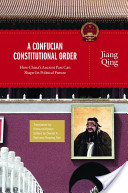 A couple of years ago, we had some discussion on this blog of the idea of Confucian “fundamentalism,” sparked by comments of Peng Guoxiang, in response to criticism from some Confucians of plans for a large church in Qufu, near the ancestral home of the Kong family (Confucius’s family). (See also the discussion of Ralph Weber’s later post, as well.) At that time, some commentators on the blog said that they felt “fundamentalism” was inapt. Prompted by having to write a review of Jiang Qing’s A Confucian Constitutional Order: How China’s Ancient Past Can Shape Its Political Future (Princeton, 2013), I would like to revisit this general question, being more specific both about what “fundamentalism” means and about the target of my analysis: not the broad group of signers of earlier petitions, but specifically Jiang Qing as he represents himself in this new book.
SEECR Deadline Approaching
The submission deadline for the 17th Southeast Early China Roundtable is approaching, and more submissions are welcomed! Please see this earlier post for more details.
ToC: Asian Philosophy 23.3
A new issue of Asian Philosophy 23.3 (2013) has been published. Five out of the six papers are on Chinese Philosophy:
Moral Emotions, Awareness, and Spiritual Freedom in the Thought of Zhu Xi (1130–1200)
Kai Marchal
Dōgen and Wittgenstein: Transcending Language through Ethical Practice
Laura Specker Sullivan
Han Fei’s Enlightened Ruler
Alejandro Bárcenas
Han Fei, De, Welfare
Henrique Schneider
Clearing Up Obstructions: An Image Schema Approach to the Concept of ‘Datong’ in Chapter 6 of the Zhuangzi
C. Lynne Hong
