【Current Issue: Vol.10, No.3, 2015】
Available at: http://journal.hep.com.cn/fpc
Special Theme: Zhuangzi’s Philosophy

【Current Issue: Vol.10, No.3, 2015】
Available at: http://journal.hep.com.cn/fpc
Special Theme: Zhuangzi’s Philosophy
The Berggruen Institute has announced the $1 million Berggruen Philosophy Prize. More information, including how to nominate someone, is below.
I have recently received information about a new project by CNKI, the outfit behind the Chinese Academic Journal Database, which some of us are lucky enough o have access to through our institutions. The new project is to make at least some of the content available in English translation, and their press release explicitly includes mention of philosophy. There will be a series of webinars introducing the new product, information about which is available here.
The APA has released the latest version of its guide to graduate programs in philosophy. It is searchable by field, and currently only three programs (all MA only) are listed under Asian Philosophy, and none under Comparative Philosophy. I know that the situation is dire, but it isn’t quite *that* dire! This is based on self-reported data, so if your school’s program includes Asian or Comparative Philosophy, you might use the feedback form on the site to ask that this information be included.
There will not be a December 2015 meeting of the Columbia University Seminar on Neo-Confucian Studies this year. Below, however, is a tentative schedule for our Spring 2016 semester. Note that to avoid scheduling conflicts with the AAS, our April session is not on the first Friday of the month.
Our sessions usually meet from 3:30 to 5:30pm in the Heyman Center for the Humanities at Columbia University. Papers will be circulated in advance.
All are welcome to attend. Please feel free to forward this message to interested colleagues. Please also join us after the seminar for dinner at a location to be announced.
The University of Hawaii Press has published Charles Muller’s translation: Korea’s Great Buddhist-Confucian Debate: The Treatises of Chong Tojon (Sambong) and Hamho Tuktong (Kihwa). More information is available below, and here.
Loubna El Amine has published a review (available here) of Fred Dallmayr’s Being in the World: Dialogue and Cosmopolis (Lexington: University of Kentucky Press, 2013). In light of El Amine’s remarks at the end of the review about the central place still occupied in Dallmayr’s theorizing by Western theory, it may be fruitful to compare with Leigh Jenco’s new book.
I am happy to announce the publication of Leigh Jenco’s new book; congratulations!
L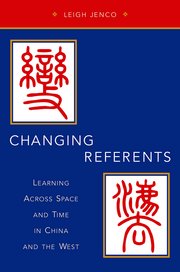 eigh Jenco, Changing Referents: Learning Across Space and Time in China and the West (Oxford University Press, 2015): 304 Pages; ISBN: 9780190263812
Globalization has brought together otherwise disparate communities with distinctive and often conflicting ways of viewing the world. Yet even as these phenomena have exposed the culturally specific character of the academic theories used to understand them, most responses to this ethnocentricity fall back on the same parochial vocabulary they critique. Against those who insist our thinking must return always to the dominant terms of Euro-American modernity, I argue and demonstrate that methods for understanding cultural others can take theoretical guidance from those very bodies of thought typically excluded by political and social theory.
Asian Philosophy 25(4) has been published; see here.
Harvard University Press has published Jaeyoon Song’s important new book on Song dynasty political thought and the role of the classics (in particular, the Zhou Li) in shaping politics. Congratulations, Jaeyoon!
