Job in China

Xiamen University is seeking an English-language lecturer; the ad only mentions teaching strengths in Western philosophy but my understanding is that they are particularly interested in candidates who also have interests in Chinese philosophy.

The School of Philosophy and Social Development at Huaqiao University, Xiamen, China, invites applications for a lectureship in philosophy.
Continue reading →

Fililal Piety Law

Interesting New York Times piece about the new law in China that requires filial piety.  Here’s a snippet:

The government enacted a law on Monday aimed at compelling adult children to visit their aging parents. The law, called “Protection of the Rights and Interests of Elderly People,” has nine clauses that lay out the duties of children and their obligation to tend to the “spiritual needs of the elderly.”

Children should go home “often” to visit their parents, the law said, and occasionally send them greetings. Companies and work units should give employees enough time off so they can make parental visits.

The law was passed in December by the standing committee of the National People’s Congress. It does not stipulate any punishments for people who neglect their parents. Nevertheless, that officials felt the need to make filial duty a legal matter is a reflection of the monumental changes taking place throughout Chinese society.

CFP: 2014 New England AAS

The deadline for New England Association for Asian Studies Conference has been extended to August 1st. Please submit all panels or individual paper proposals online here. Bridgewater State University is conveniently located between Boston and Providence and easily accessible by car or by commuter rail from Boston. Participants who are from outside Eastern Massachusetts can choose from a large number of hotels south of Boston or around Route 24 near Bridgewater, or stay at a hotel in Boston to take the train from South Station to Bridgewater.

Continue reading →

Jiang Qing and Fundamentalism

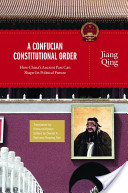
booksA couple of years ago, we had some discussion on this blog of the idea of Confucian “fundamentalism,” sparked by comments of Peng Guoxiang, in response to criticism from some Confucians of plans for a large church in Qufu, near the ancestral home of the Kong family (Confucius’s family). (See also the discussion of Ralph Weber’s later post, as well.) At that time, some commentators on the blog said that they felt “fundamentalism” was inapt. Prompted by having to write a review of Jiang Qing’s A Confucian Constitutional Order: How China’s Ancient Past Can Shape Its Political Future (Princeton, 2013), I would like to revisit this general question, being more specific both about what “fundamentalism” means and about the target of my analysis: not the broad group of signers of earlier petitions, but specifically Jiang Qing as he represents himself in this new book.

Continue reading →

ToC: Asian Philosophy 23.3

A new issue of Asian Philosophy 23.3 (2013) has been published. Five out of the six papers are on Chinese Philosophy:

Moral Emotions, Awareness, and Spiritual Freedom in the Thought of Zhu Xi (1130–1200)
Kai Marchal

Dōgen and Wittgenstein: Transcending Language through Ethical Practice
Laura Specker Sullivan

Han Fei’s Enlightened Ruler
Alejandro Bárcenas

Han Fei, De, Welfare
Henrique Schneider

Clearing Up Obstructions: An Image Schema Approach to the Concept of ‘Datong’  in Chapter 6 of the Zhuangzi
C. Lynne Hong

Relation-Centred Ethics in Confucius and Aquinas
Qi Zhao

International Daoism Conference

A major conference on Daoism is returning to Boston next year. For information on registration and paper submission, see below.

Daoism: Tradition and Transition
9th International Conference on Daoist Studies

Boston University, May 30- June 1, 2014

For the last ten years, the series of international conferences on Daoist Studies has been instrumental in enhancing the study, application, and awareness of Daoism throughout the world. The only major Daoist conference series, it follows a tradition that began in Boston (2003) and continued through Mt. Qingcheng (2004), Fraueninsel in Bavaria (2006), Hong Kong (2007), Mt. Wudang (2009), Los Angeles (2010), Mt. Nanyue (2011), and Ammersee Lake near Munich (2012). In honor of its great success and as a tribute to Boston University for the initial conference, the 9th International Conference on Daoist Studies will take place once again at Boston University.

Continue reading →

Korean Modernity and Philosophy Workshop

KOREAN MODERNITY/COLONIALITY

KOREAN PHILOSOPHY WORKSHOP

University of San Francisco, August 13-14, 2013

 Korean Philosophy Flier

Many elements formed Korean modernity/coloniality from the 19th century onward: a receding Sinocentric world, an encroaching Western world, Japanese colonialism, the “New Woman,” racialization, Marxism, a cataclysmic war at home, a divided country, U.S. imperialism, struggles between authoritarian regimes and peoples’ movements, a diasporic nation… This workshop explores philosophical figures and themes in this nexus of forces and concepts. Talks and speakers include:

Continue reading →